Building from our part one of our series, where we defined what Skill Agility is and why it’s critical for business success, let’s talk about how to measure it. How can you tell if your organization, line of business, team, or individual employees are capable of developing skills at the pace of change? And if they are capable, how adept are they, and how do they compare to others?
To understand your organization’s current level of Skill Agility®, you must assess the health of your entire learning ecosystem. This includes five domains:
- Learning strategy
- Learning culture
- Learning offering
- Learning support
- Learning technology
Let’s explore each domain and what to consider as we evaluate.
Measuring Your Organizations Skill Agility®:
In order to develop skills at the pace of change, it is essential for an organization to manage the following:
Learning Strategy
Your learning strategy should be driven by business objectives and include a clear purpose and approach to learning with measurable outcomes. When evaluating the learning strategy, we consider:
- Does a well-defined learning strategy exist today?
- How well do key stakeholders understand and champion the learning strategy?
- To what extent is the learning strategy tied to business objectives?
- How does the learning strategy account for short- and long-term needs?
- How are skill gaps and upskilling or reskilling needs currently determined?
Learning Culture
Learning culture is a carefully cultivated environment where learning can thrive (or fail). This includes attitudes toward learning, incentives and rewards, leadership buy-in (or lack of buy-in), and the operational processes that make it possible to create, consume, and share learning. When evaluating the health of the learning culture, we consider:
- To what extent is learning rewarded or incentivized?
- How safe is it for employees to experiment, fail, and learn from failure?
- How do managers and leaders encourage learning?
- To what extent has learning become operationalized in the culture?
Learning Offering
The learning offering is where many organizations place the most emphasis. This includes learning experiences, multi-modal content, channels, and even credentials. Although great learning offering on its own is not enough to advance Skill Agility®, it is a critical component that’s largely responsible for driving positive learner engagement. When evaluating learning offering, we consider:
- How many learning modalities are offered to the learner?
- What options exist to promote learner choice and account for learner preferences?
- What is the mix of available formal and informal learning opportunities?
- How is learning delivered?
- How is learning put into practice and skill proficiency measured?
- What guidance is offered to help navigate learning opportunities? (Pathways, journeys, channels, etc.)
Learning Support
Learning support is perhaps the most overlooked domain inside the learning ecosystem. Who will come alongside the learner to provide guidance as they work on new skills? This may include peers, internal experts, coaches, managers, and AI working together to create feedback loops that provide the input and know-how learners need to improve. When evaluating learning support, we consider:
- How often do learners receive feedback as they are learning new skills?
- How effective is the feedback learners receive?
- How do peers share information and best practices with one another?
- To what extent are AI-driven tools used to help support learning and manage organizational knowledge?
Learning Technology
Learning technology helps enable Skill Agility® at scale. Many large businesses find it challenging to organize their tech stack in a way that makes it effective for users. Many smaller or medium-sized businesses try to do too much with limited technology. When evaluating learning technology, we consider:
- What learning technology exists inside the organization today?
- To what extent are users engaged with the technology?
- What is the approach to maintaining and administering the technology?
- To what extent do users understand how and when to use technology?
- What data analytics are available and how effective are they?
Qualitative and Quantitative Measures
To assess each of the five domains, you need to utilize qualitative and quantitative measures. This looks like a combination of focus groups, Likert surveys, and analysis of available learning data. The goal is to understand the point of view of end users (individual learners), learning leaders, and business stakeholders to paint a comprehensive picture of the health of the learning ecosystem and the current level of Skill Agility®.
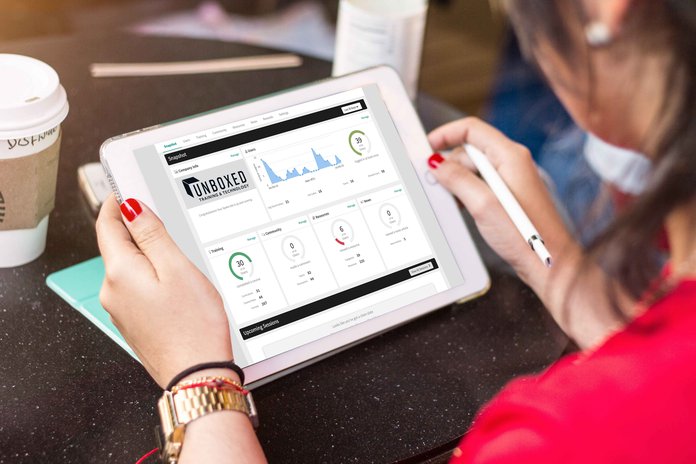
Unboxed’s diagnostic tool can help objectively assess and benchmark Skill Agility®. Interested in seeing how your org measures up? Contact us to learn more.
In the next article in this series, we’ll explore specific ways leaders can support Skill Agility®.