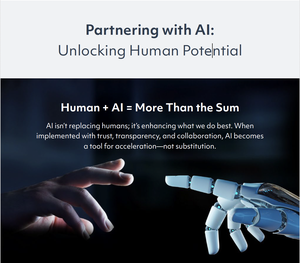
The Technology Trap: Why More Tools Aren't Creating Better Performance
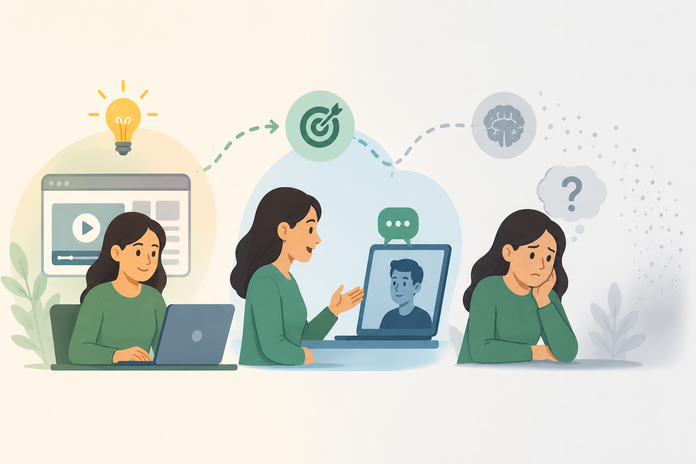


Chief Learning Officer "June" — Follow Her Story
For decades, organizations have invested in technology with a simple expectation: better tools should produce better business results. From enterprise resource planning systems to CRM platforms and learning management systems, each new generation of technology has promised to make organizations faster, smarter, and more productive.
Artificial intelligence has accelerated that trend dramatically. Nearly every executive conversation now includes discussions about AI copilots, workflow automation, conversational intelligence, knowledge assistants, and predictive analytics. These technologies are transforming how work gets done, creating opportunities to improve efficiency at a scale that would have seemed impossible only a few years ago.
Yet many executive teams are beginning to ask an uncomfortable question. If organizations are investing more in technology than ever before, why aren't they seeing a proportional improvement in workforce performance?
That question sits at the center of one of the biggest challenges facing Learning & Development leaders today. Technology continues to improve at an extraordinary pace, but business performance still depends on something technology alone cannot create: human capability.
A Familiar Conversation in the Executive Boardroom
June had spent more than twenty years leading learning organizations for global enterprises. Throughout her career, she had overseen onboarding transformations, modernized sales enablement, launched leadership academies, and helped thousands of employees develop new capabilities. She had always believed that better learning produced better performance.
Then the conversation changed.
Almost overnight, every executive meeting centered on artificial intelligence. The CIO presented plans for enterprise copilots and workflow automation. The CRO discussed investments in conversational intelligence, deal analytics, and AI-assisted selling. HR expanded the learning technology roadmap with new platforms, content generation tools, and talent marketplaces. Every strategic discussion seemed to conclude with another technology investment.
June wasn't opposed to any of it. In fact, she recognized that these innovations could create tremendous value. What concerned her was that the conversation had shifted almost entirely toward technology, while discussions about building workforce capability became increasingly rare.
A few weeks later, during the quarterly business review, the CEO summarized what many leaders had quietly been wondering.
"We're investing more than ever in technology. Are our people actually performing better?"
The room fell silent.
The technology wasn't the problem. The real question was whether the organization was investing enough in the people expected to use it.
The Enterprise Technology Arms Race
Over the past decade, most organizations have steadily expanded their enterprise technology stacks. Rather than replacing existing systems, they've layered on additional capabilities designed to improve efficiency, increase visibility, and automate routine work.
Within sales organizations, technology ecosystems often include:
- CRM platforms
- Sales engagement tools
- Conversation intelligence
- Deal intelligence
- Revenue forecasting
- AI sales assistants
- Sales enablement platforms
Each solution delivers meaningful value. Together, they create an impressive infrastructure that helps sellers prepare for customer interactions, manage opportunities, and analyze performance more effectively than ever before.
Learning and HR organizations have followed a similar path. Today's technology stacks commonly include:
- Human Resource Information Systems (HRIS)
- Learning Management Systems (LMS)
- Learning Experience Platforms (LXP)
- Digital content libraries
- Talent marketplaces
- Performance management systems
- Coaching platforms
- AI-powered content creation tools
Collectively, these systems provide unprecedented access to information, learning resources, and workforce data. Yet despite significant investments, many organizations continue to struggle with inconsistent execution, uneven coaching, slow onboarding, and difficulty translating learning initiatives into measurable business outcomes.
The challenge isn't a lack of technology. It's that technology and capability are often treated as if they are the same thing.
Information Doesn't Create Capability
One of the most common misconceptions surrounding AI is that better access to information automatically produces better performance. While AI dramatically improves how quickly employees can find, organize, and analyze information, capability is something entirely different.
Consider a salesperson preparing for an important customer meeting. Within minutes, AI can summarize account history, identify competitive threats, recommend next-best actions, analyze previous conversations, draft follow-up emails, and even generate suggested discovery questions. The preparation process becomes faster, more personalized, and far more efficient.
Once the meeting begins, however, success depends on skills that no AI model can fully replace. The seller must establish trust, ask thoughtful questions, adapt to unexpected objections, communicate with confidence, and build meaningful relationships. Those capabilities are developed through experience, practice, coaching, and continuous refinement—not through technology alone.
Technology prepares people for work. People still perform the work.
Understanding this distinction changes how organizations should think about workforce development. AI can enhance knowledge and accelerate preparation, but it does not automatically improve judgment, communication, adaptability, or leadership.
Technology Amplifies Existing Performance
Organizations frequently describe AI as transformational, and in many ways it is. The important question, however, is what it transforms.
Technology rarely creates excellence on its own. Instead, it amplifies whatever capabilities already exist within an organization.
When managers consistently coach their teams, AI can help them coach more efficiently by surfacing performance trends and identifying development opportunities. When sellers excel at discovery conversations, AI enables them to prepare faster and personalize customer interactions more effectively. When leaders make thoughtful decisions, better analytics increase confidence and speed.
The opposite is equally true.
If managers provide inconsistent coaching, technology simply scales inconsistency. If sales conversations lack curiosity or strategic thinking, AI accelerates ineffective behaviors rather than correcting them. When organizations automate flawed processes, they execute those flawed processes faster and at greater scale.
Technology is not a substitute for capability. It is a multiplier of capability.
Why Human Skills Matter More Than Ever
Ironically, the rapid advancement of AI is increasing—not decreasing—the importance of uniquely human skills.
As technology becomes more capable of processing information, competitive advantage shifts toward capabilities that require judgment, creativity, empathy, adaptability, and interpersonal effectiveness. Organizations are no longer competing solely on access to information; they're competing on how effectively people apply that information.
Capabilities that continue to grow in strategic importance include:
- Critical thinking and sound judgment
- Communication and executive presence
- Coaching and leadership
- Adaptability and resilience
- Relationship building
- Decision making under uncertainty
These skills have always mattered, but their relative value continues to increase as AI becomes more widely available. When every competitor has access to similar technologies, technology becomes table stakes. Human capability becomes the differentiator.
The future isn't AI versus people.
The future is AI enabling people to perform at a higher level.
June's Breakthrough
Driving home after the executive review, June reflected on another conversation she'd had several months earlier. During a strategy session, the COO had asked a simple question.
"So what actually changed?"
At the time, she believed the answer involved improving learning experiences. Now she realized the challenge was much broader.
Organizations had spent years building systems that managed work. They had modernized communication, automated workflows, improved reporting, and made information more accessible than ever before.
What many organizations had not built were systems intentionally designed to develop capability.
That realization fundamentally changed how she viewed Learning & Development. The role of L&D wasn't simply to create content or implement another platform. Its responsibility was to help the organization continuously build the capabilities that technology could never replace.
A New Opportunity for Learning Leaders
This shift creates an opportunity for Learning & Development to become significantly more strategic. Rather than measuring success primarily through course completions or technology adoption, L&D leaders can focus on building the capabilities that directly support business strategy.
That begins by helping executive teams answer four critical questions:
- What capabilities will our business strategy require over the next three to five years?
- Which skills enable those capabilities?
- How do employees develop those skills through practice, coaching, and experience?
- How do we measure capability growth instead of simply measuring learning activity?
These questions reposition Learning & Development from a content provider to a capability architect. They also shift conversations away from training events and toward continuous performance improvement.
As AI continues reshaping the workplace, organizations that intentionally develop human capability alongside technology investments will create a meaningful competitive advantage.
Key Takeaways
Artificial intelligence will continue to evolve. Enterprise technology stacks will continue to expand. Organizations will continue investing heavily in digital transformation because the potential business value is significant.
However, sustainable competitive advantage will not come from owning more technology than competitors. It will come from developing people who know how to apply that technology to create value for customers, teams, and the business.
Technology changes how work gets done. People determine how well it gets done.
Organizations that recognize this distinction will move beyond viewing AI as the strategy itself. Instead, they will use technology to accelerate stronger coaching, better decision making, continuous skill development, and measurable business performance.
That is why the future belongs to organizations that keep the human in the loop.